How to do a 1000-piece puzzle: techniques that work
To put together a 1000-piece puzzle, the steps are: turn all the pieces right-side up just once while picking out the edges, sort by color, start with the easiest area, and leave the sky or solid color sections for last, sorting them by piece shape. If you're looking at a freshly opened box, you should know there isn't an official method. Just like Tammy McLeod, Guinness World Record holder and founder of the USA Jigsaw Puzzle Association, says: "there's no wrong way to puzzle". However, frequent puzzlers agree that the best strategy, according to Alejandro Darias from the Spanish Puzzle Association, is to always progress from lowest to highest difficulty.
Before you begin: the perfect table and lighting
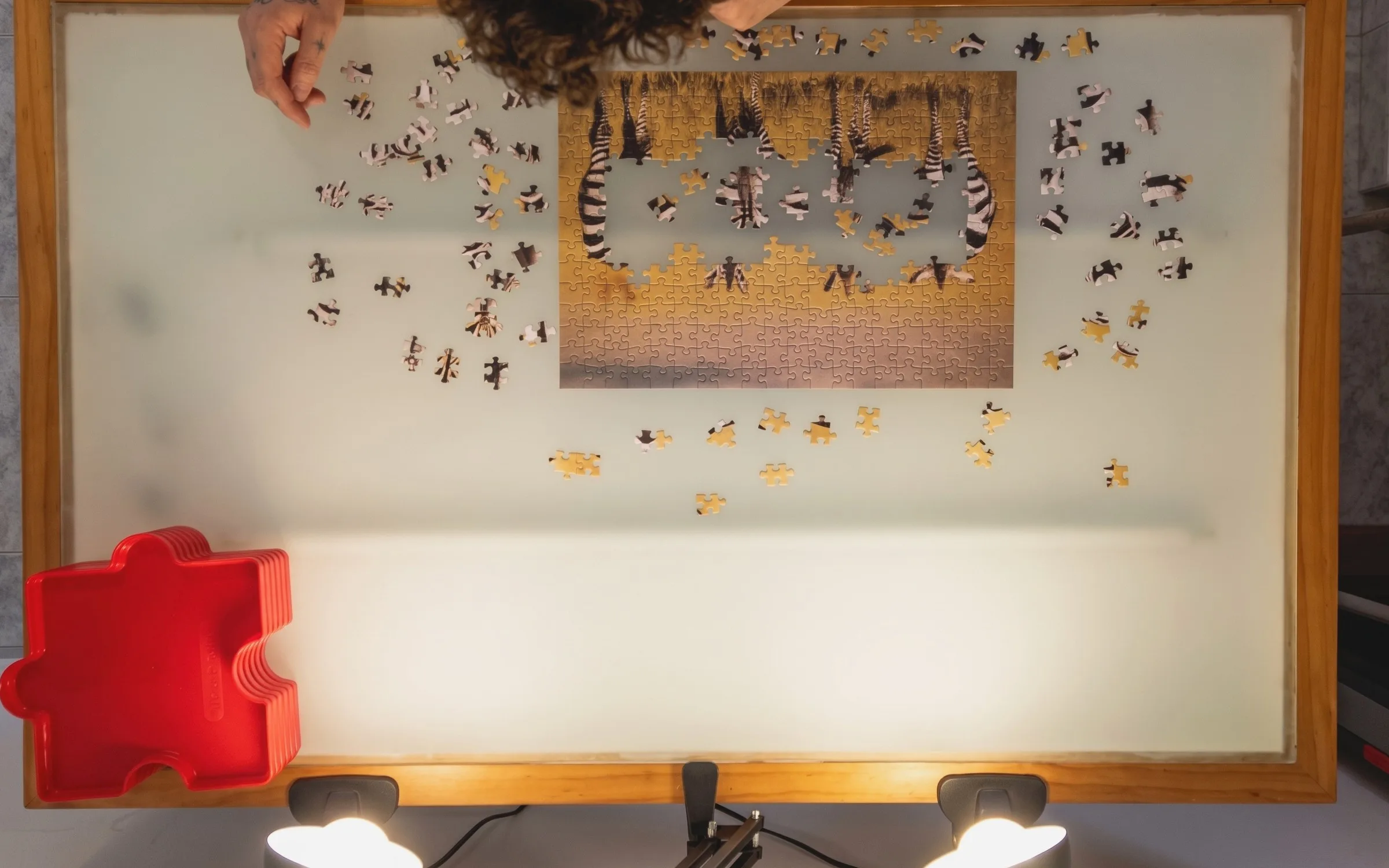
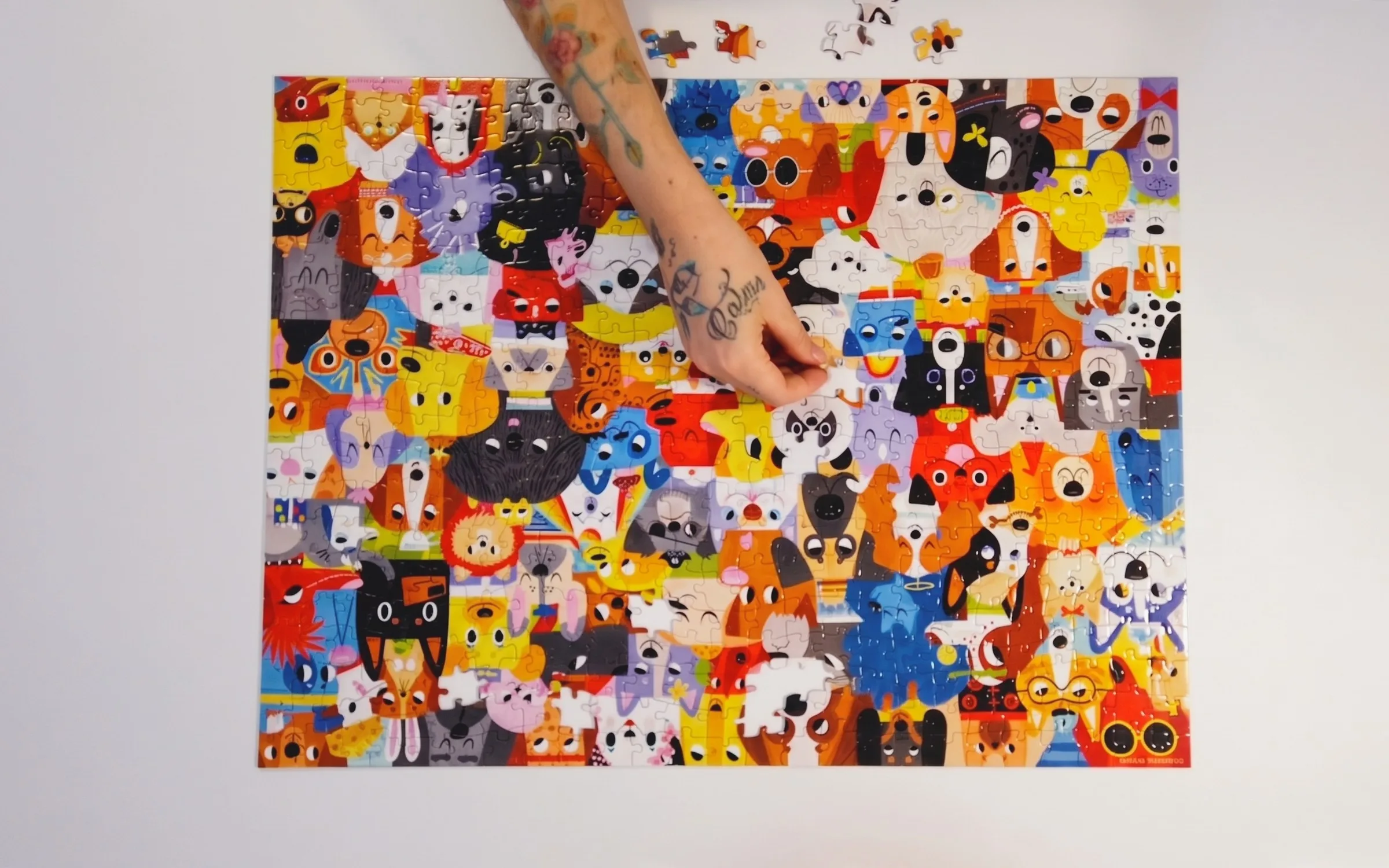
- Table size: A finished 1000-piece puzzle usually measures about 70 × 50 cm. For example, in the Puzzlr catalog, we see that a Reverie model measures 50 × 70 cm, an Ingenio Destreza Mental is 68 × 48 cm, and a Mini A3 format is 42 × 29.7 cm. Make sure you have extra space around it to sort loose pieces.
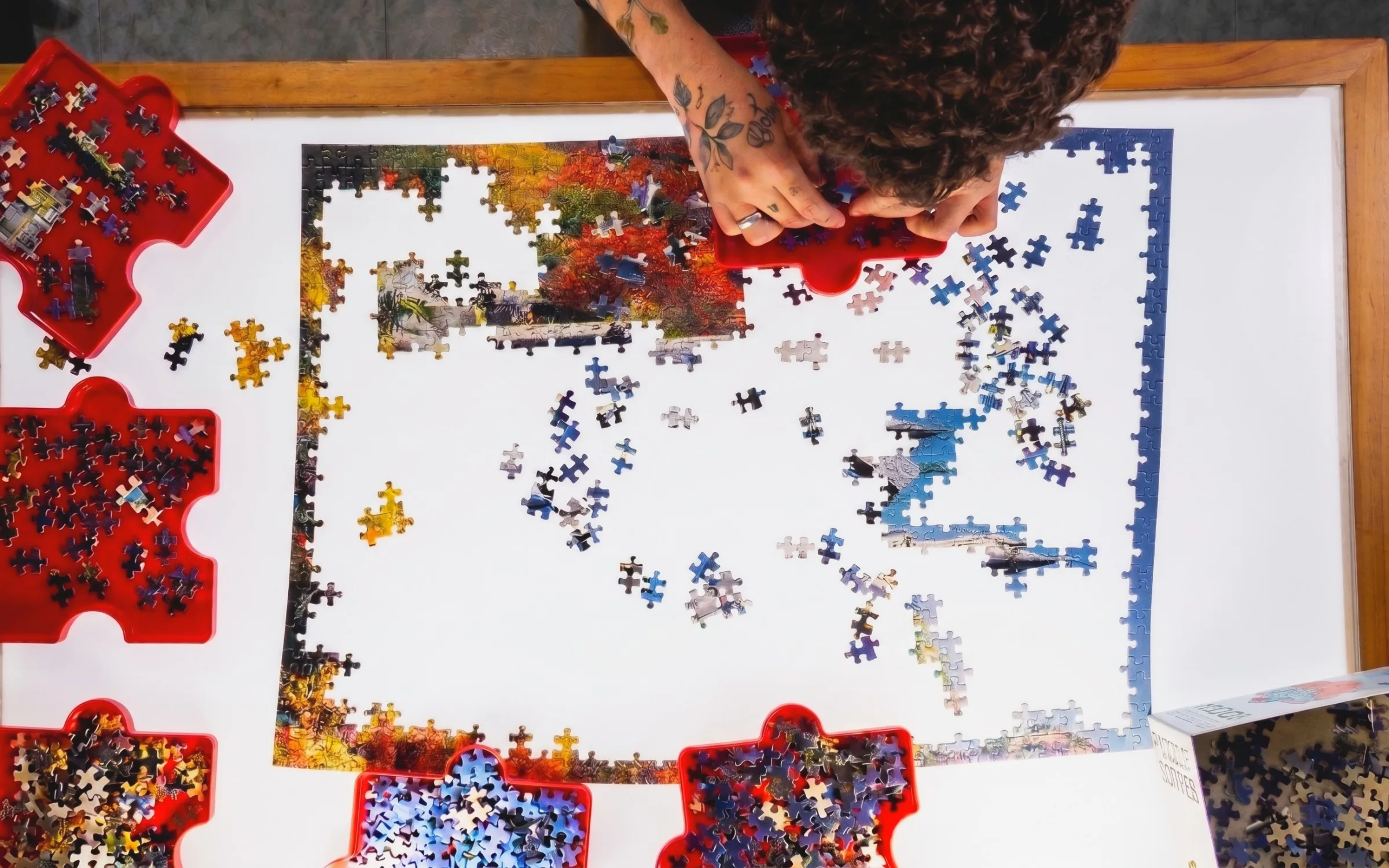
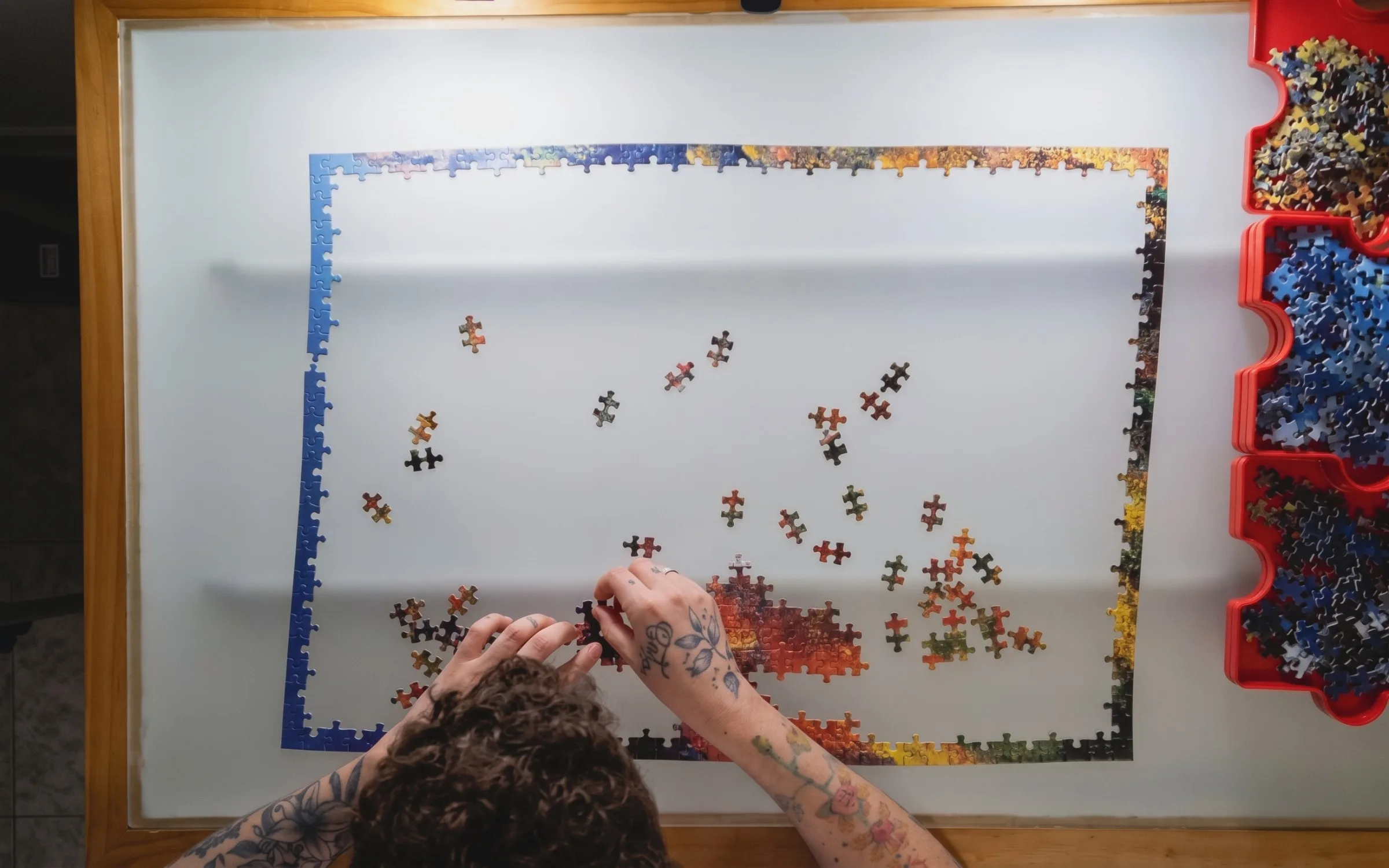
- Background and base: It's ideal to puzzle on a board or a large piece of cardboard that allows you to move the puzzle if you need the table. For contrast, Marisol, from the channel Paraíso de Rompecabezas, recommends puzzling on a white table and keeping a lightweight board handy that is white on one side and black on the other for when the pieces are very light.
- Lighting: The cardboard's glare can hide the image. Marisol uses adjustable desk lamps and even a handheld flashlight for details, and she even tilts her head to change her viewing angle and see better.
Step one: turn pieces over just once and pick out the edges
The crucial step is to flip all the pieces right-side up and set aside the edge pieces (the ones with a flat side) in that same pass. According to creator Karen Kavett, this process takes about half an hour for a 1000-piece puzzle. From that point on, no piece should ever be face down again.
A very common mistake is stacking pieces because it forces you to shuffle through them later and you can't see what's underneath. In fact, YouTuber Jigsaw Johnie estimates he has flipped many pieces over three, four, and even five times looking for something.
Where do you start?
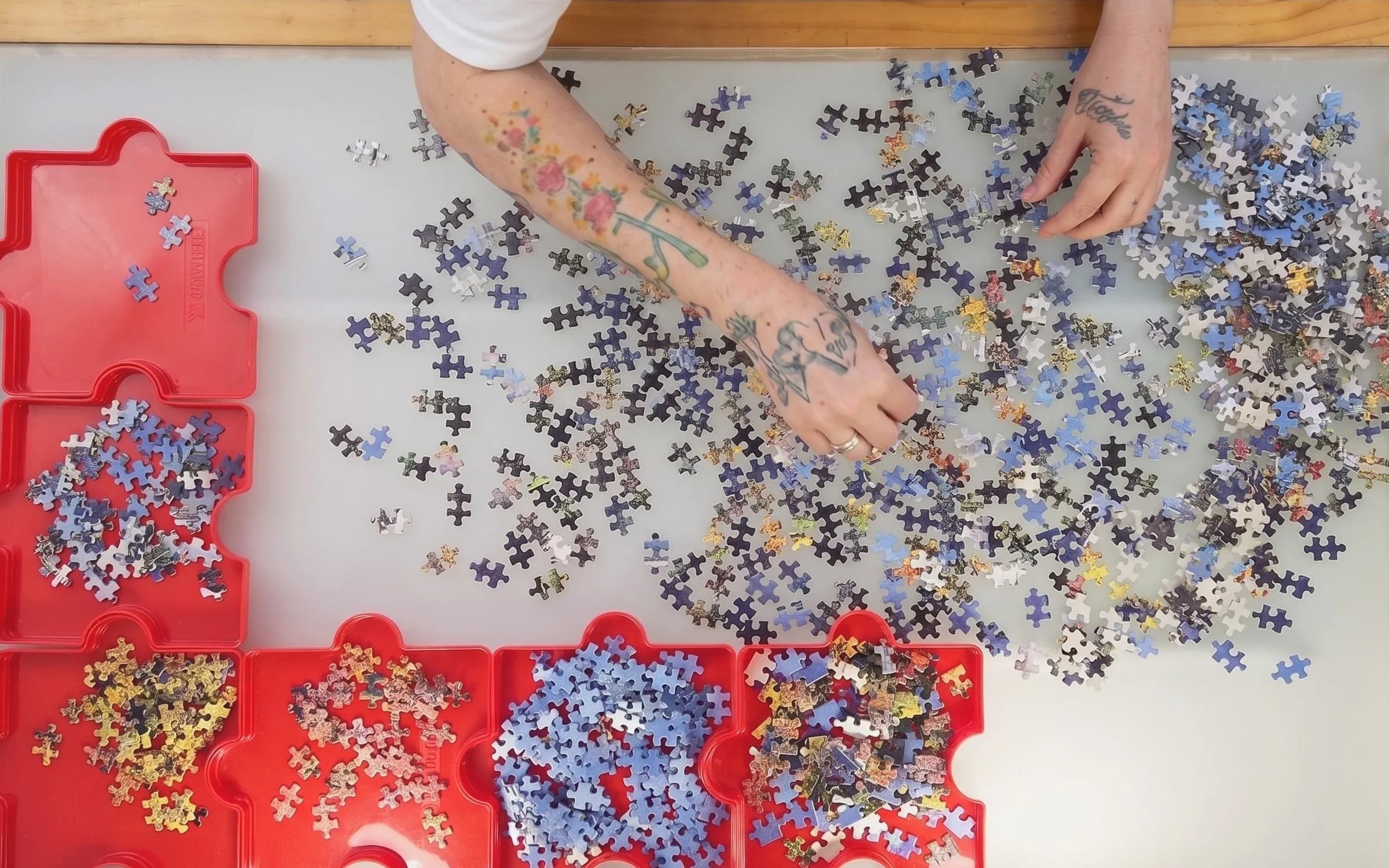
Sort each recognizable color or section into its own pile or tray. Whatever you don't know where to put, toss into what Marisol calls "the box of unknowns" (but be careful not to let it become a dumping ground out of laziness to sort).
To start, pick the easiest pile, which is usually the smallest or the most brightly colored. Janette (from the channel Janette & Her Puzzles) starts with the smallest pile because it tends to be the easiest, a strategy Marisol also shares. Each completed section removes pieces from the table, leaving you with fewer options to search through.
What about the border? Putting it together at the beginning gives you an idea of the size if it has a variety of colors, but if it's a single solid color, save it for last. World champion Alejandro Clemente does exactly this, sorting by shape when the border is a solid color. As Alejandro Darias warns, if the border is the hardest part, starting there "is a bad idea".
What do I do with the sky or solid color areas?
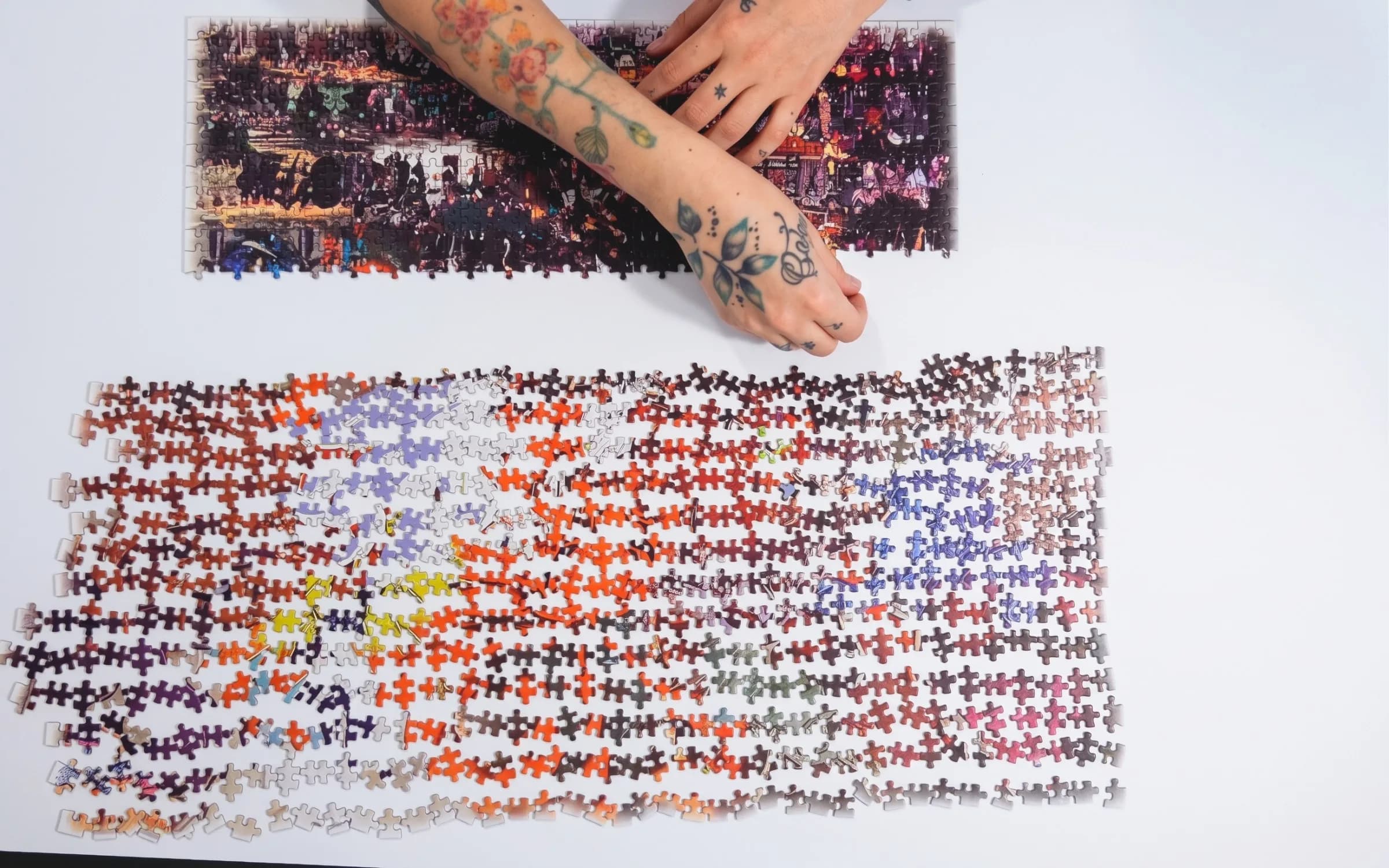
As Marisol states: "the sky is a puzzle lover's hell". When color doesn't help, the strategy shifts to relying exclusively on shape.
- Sort by type: Marisol recommends lining up the pieces in rows based on their knobs (tabs) and holes (blanks): first the classic two-and-twos, then the three-and-ones, etc.. Karen Kavett does the exact same thing with blue skies.
- Look for weird gaps: Identify spaces that call for unusual shapes (like three knobs or very wide pieces), as these fill up quickly since there are fewer options.
- Rely on corners: Starting the sky from a corner helps because each new piece has two sides to build on.
How to test pieces and tackle the final stretch
Testing pieces at random wastes a ton of time. If you're unsure about a fit, hold both pieces up together against the light; if no light shines through the seam, they fit perfectly (Karen Kavett). This prevents false fits, which are pieces that seem to go in but leave a slight gap.
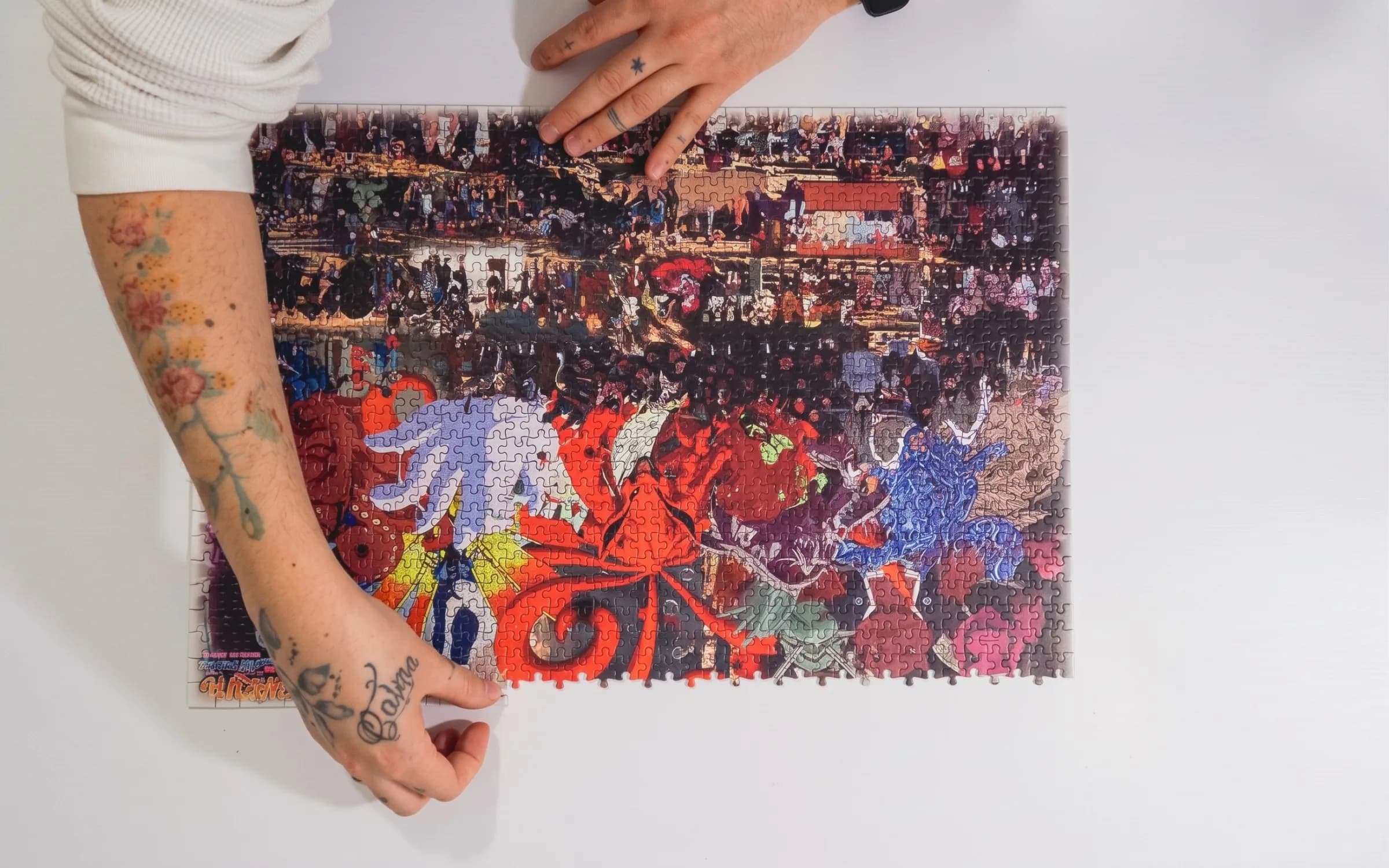
In the final stretch, you're left with just a few, very similar-looking pieces. Janette advises that if you have three or four pieces left for a section and feel the need to force them, it's better to move on to another area for a while. If you get stuck, Karen Kavett suggests rotating the entire puzzle; looking at it upside down lets you spot blocks of shape and color your brain was previously ignoring. Or do what Marisol does: get up, take a break, and come back with a refreshed mind.
Puzzle cuts and how they affect the build
The brand's cut determines the difficulty. According to Puzzle Warehouse, these are the three main types:
| Cut type | What the pieces are like | What to keep in mind |
|---|---|---|
| Ribbon | Almost all have two knobs and two holes, lining up in rows | It's easy for a piece to seem like it fits where it doesn't; look closely at the color before letting it go. |
| Grid | Rows and columns, but with more varied shapes | These have fewer false fits than the ribbon style. |
| Random | Every piece has a completely unique shape | The shape itself is a huge clue; watch out, there are flat sides that don't belong to the border. |
Janette recommends that beginners opt for grid cuts from European brands rather than random cuts.
The most common beginner mistakes
- Flipping pieces multiple times: Do it in a single initial pass so you don't mess up what's already sorted.
- Stacking pieces: Whatever ends up on the bottom simply disappears from sight.
- Sorting without a clear plan: You'll end up with a giant pile of "everything else" that will be a massive headache.
- Forcing pieces: When you have three or four pieces left in a section and you want to force them, it's best to switch areas and come back later.
- Picking the wrong image: Buying your first 1000-piece puzzle based solely on the picture can be a mistake. Too much sky, gradients, or similar colors will drag out the time. For your first one, look for images with very distinct color areas.
How to puzzle as a couple or in a group?
Working as a team requires coordination. The Puzzle Poezen, a four-person Dutch team, have a system where one person sorts pieces and assigns "projects" to the rest: one does the sky, another the edges. As a couple, you can divvy things up similarly: while one person flips pieces and builds the border, the other starts connecting the sections that stand out the most.
Track your time and keep puzzling with Puzzlr
Our data shows that the median time to complete a 1000-piece puzzle is 5 hours and 9 minutes. To learn your own pace and see your improvement, you can track your times:
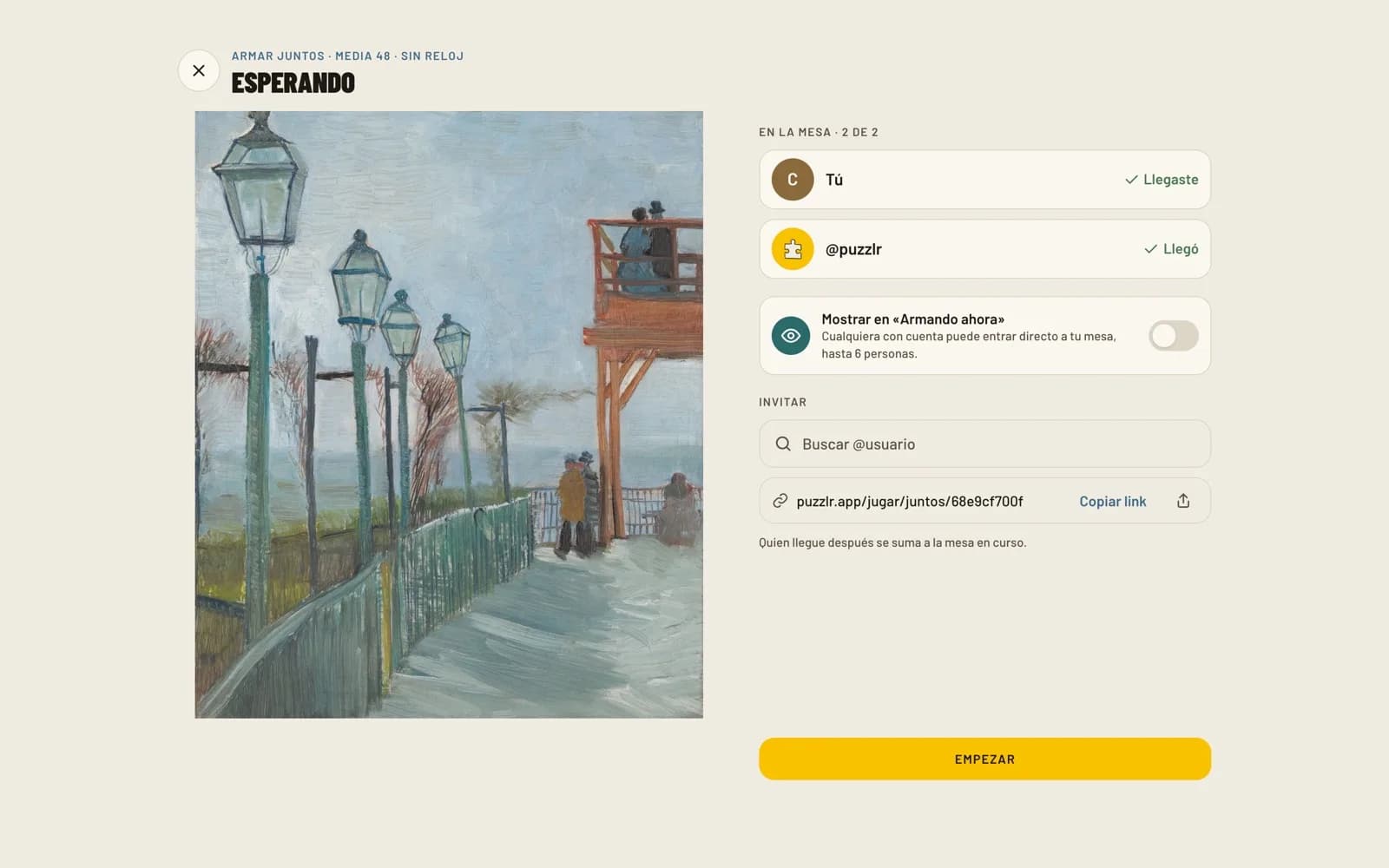
- Download the free Puzzlr app on the App Store or Google Play. The app lets you start a timer, pause it when you get up from the table, and compare your result with the community.
- Visit our Daily Jigsaw Puzzle on the web, a new daily piece of art that you can put together right in your browser for free with nothing to install.
- Practice specific skills in our Entrenar section, where you'll find short exercises on how to put together borders, shapes in solid areas, and gradients (free account required).
- Already finished it? Check out our guide on how to glue and frame a puzzle.
Frequently asked questions
-
Where do you start?
Start by flipping all the pieces right-side up just once while picking out the edge pieces. After that, sort by color and kick things off with the easiest pile. -
Should you start with the border?
Only if the border has a variety of colors and textures. If the border is entirely one solid color, it's better to save it for last and start with the easiest section. -
How do you put together a 1000-piece puzzle faster?
Don't flip pieces twice or stack them, start with what stands out the most, leave the sky for last and assemble it by shape, only test fits when you're almost certain, and switch sections when one gets you stuck. -
What table size do I need?
A 1000-piece puzzle measures about 70 × 50 cm. You need a table that can accommodate that size plus a good amount of extra space (or trays) to lay all the pieces out flat and face up. -
What do I do with the sky or solid color areas?
Sort those pieces exclusively by their shape (number of knobs and holes). Line them up in rows and first look for the weirdest-shaped gaps in your puzzle. -
What do I do with the final pieces?
If you get stuck on pieces that are almost identical, rotate the puzzle to look at it from another angle, hold pieces up to the light to avoid false fits, or simply take a break. -
What mistakes do beginners make?
The most common ones are flipping pieces multiple times, stacking them (hiding the ones underneath), forcing fits that don't belong, and picking a first puzzle with too much sky or very similar colors.