How to glue and frame a puzzle, step by step
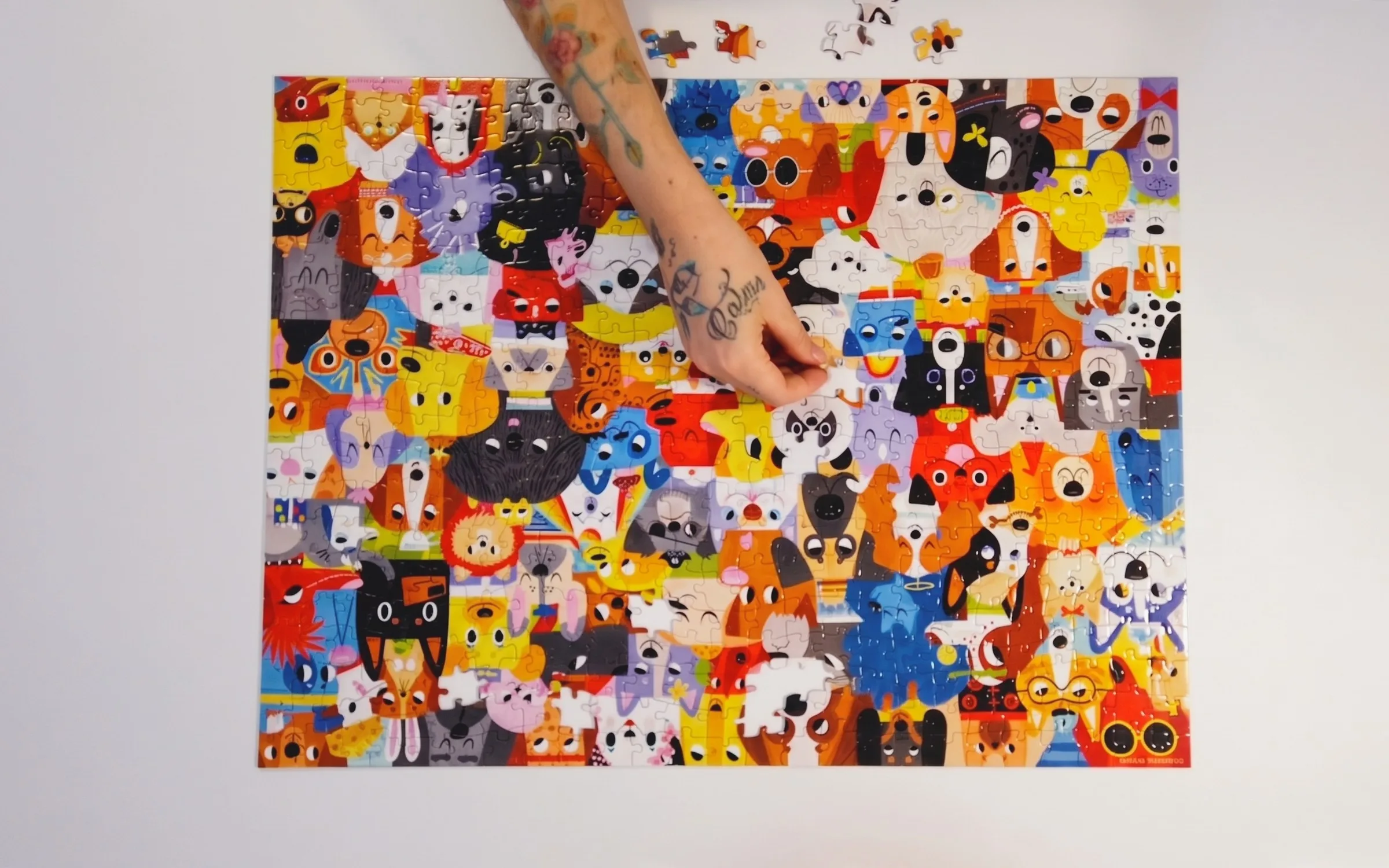
You’ve invested hours, days, or weeks completing that puzzle, and now you want to display it on your wall. Gluing and framing it is the final step, but if it isn’t done correctly, all your hard work could be ruined. With the right technique and materials, your puzzle will look perfect. You transfer the finished puzzle to wax paper, flatten it, spread a thin layer of glue over the front, let it dry completely, mount it on foam board, and frame it. And if it's made of wood or you want to put it together again, you can frame it without glue in a shadow box frame.
Record Your Achievement Before Gluing
Before applying any glue, we recommend recording your feat. YouTuber Karen Kavett mentions that she almost never glues her puzzles; she takes some photos of the finished piece and takes it apart, because once glued, it can't be put together again. In the Puzzlr app, you can save a photo of your finished puzzle, the total time, and the sessions it took you to complete it. This way, it will remain in your digital collection forever, even if the physical puzzle ends up hanging on the wall. You can download Puzzlr for free on the App Store or on Google Play.
The Step-by-Step Gluing Process
According to Ceaco, a well-known puzzle manufacturer, the golden rule is to choose the frame before mounting your artwork. With the frame in hand, you'll know exactly how much backing board to leave. Follow these steps for flawless results:
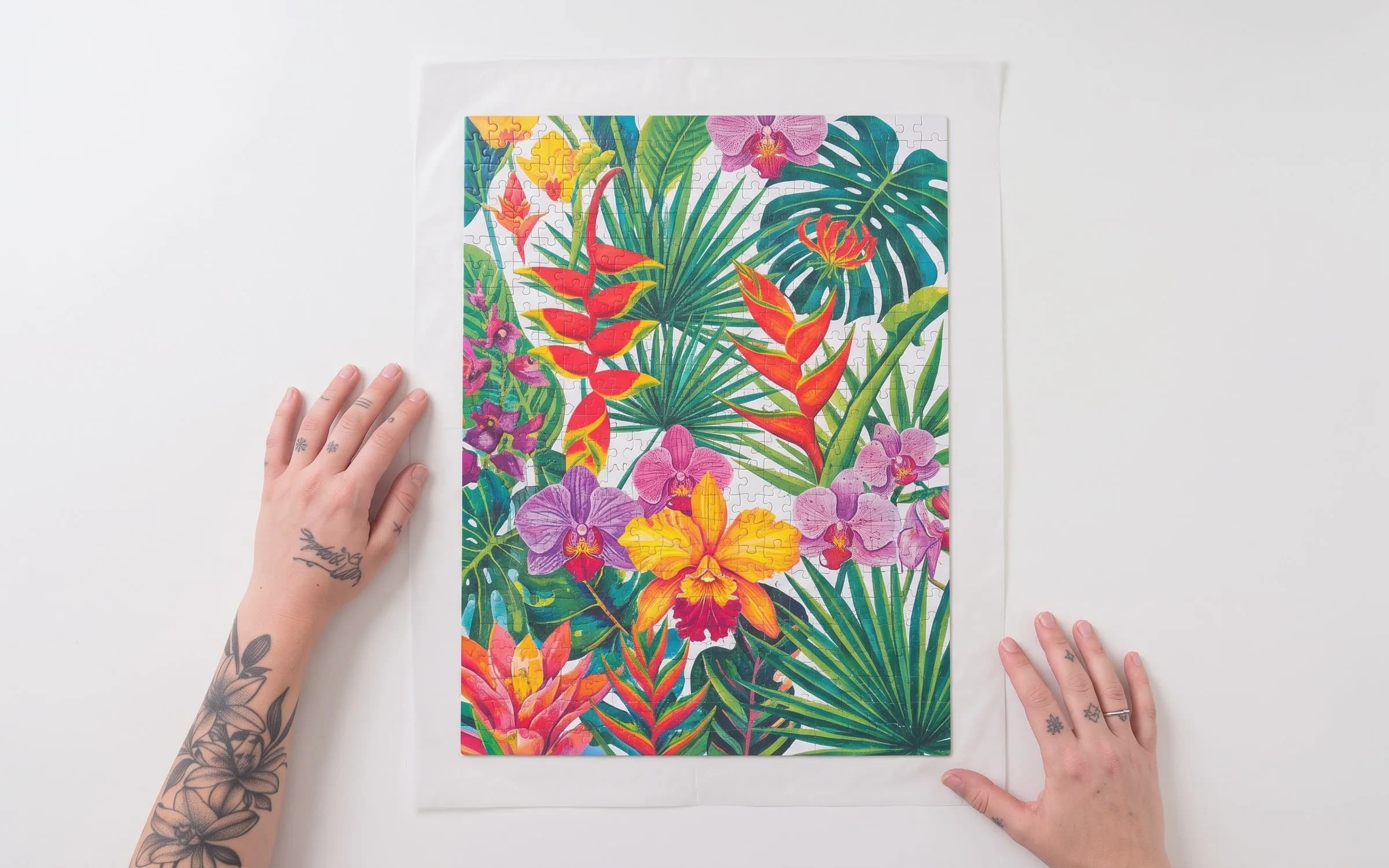
- Prepare the surface: Slide the assembled puzzle onto a piece of wax or parchment paper that is larger than the image.
- Flatten the pieces: Run a rolling pin (or a heavy, flat object) over it to ensure all pieces are level.
- Apply the glue: Pour some glue in the center and spread it toward the edges using a spatula, a card, or a piece of cardboard. Pay special attention to the joints between the pieces. Use a thin layer, as an excess will cause the pieces to warp when drying.
- Let it dry: The glue usually sets in about 4 or 5 hours, depending on the type.
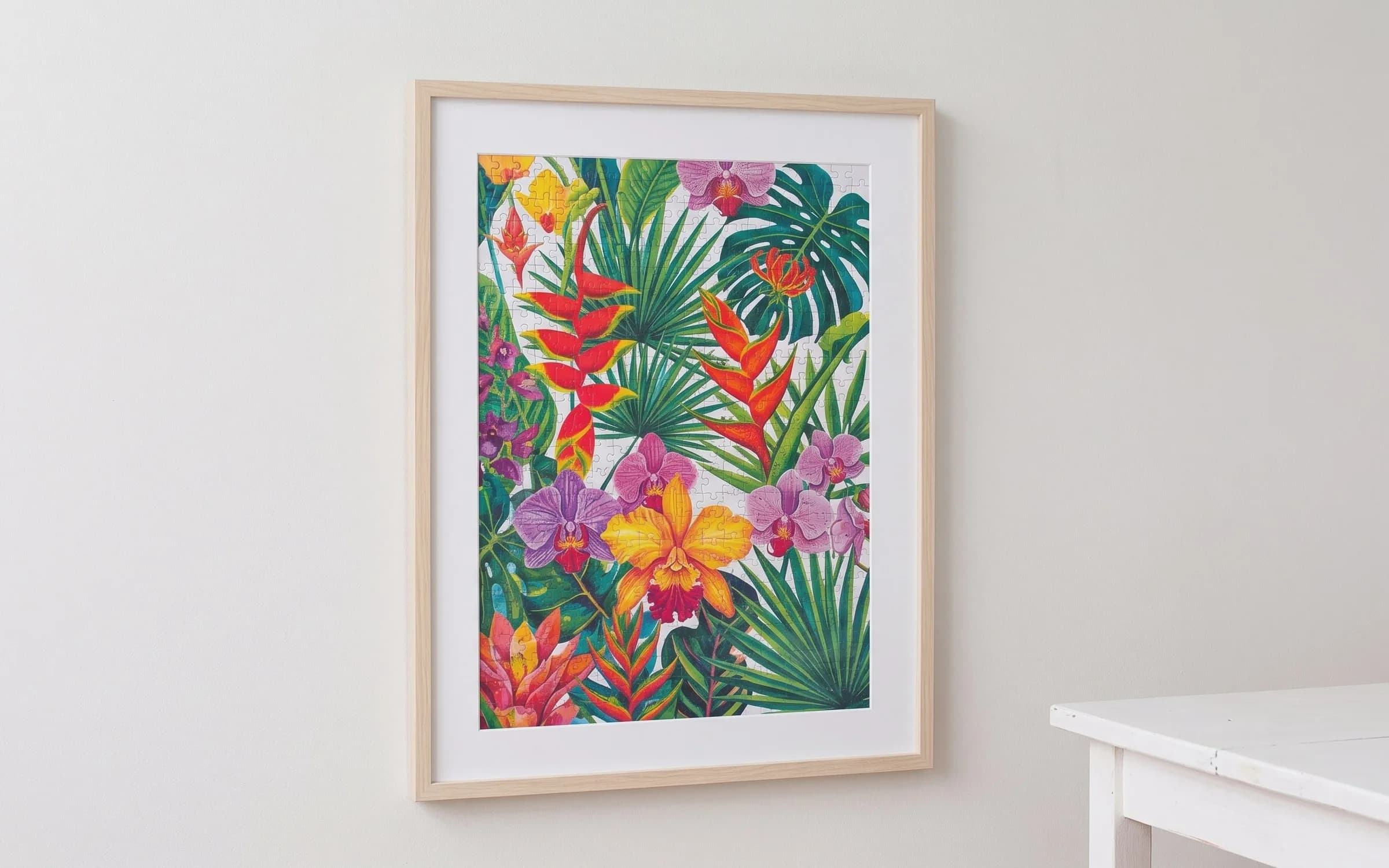
- Mount the backing: Glue it onto a foam board cut to the size of the frame and let it dry for 24 hours before framing.
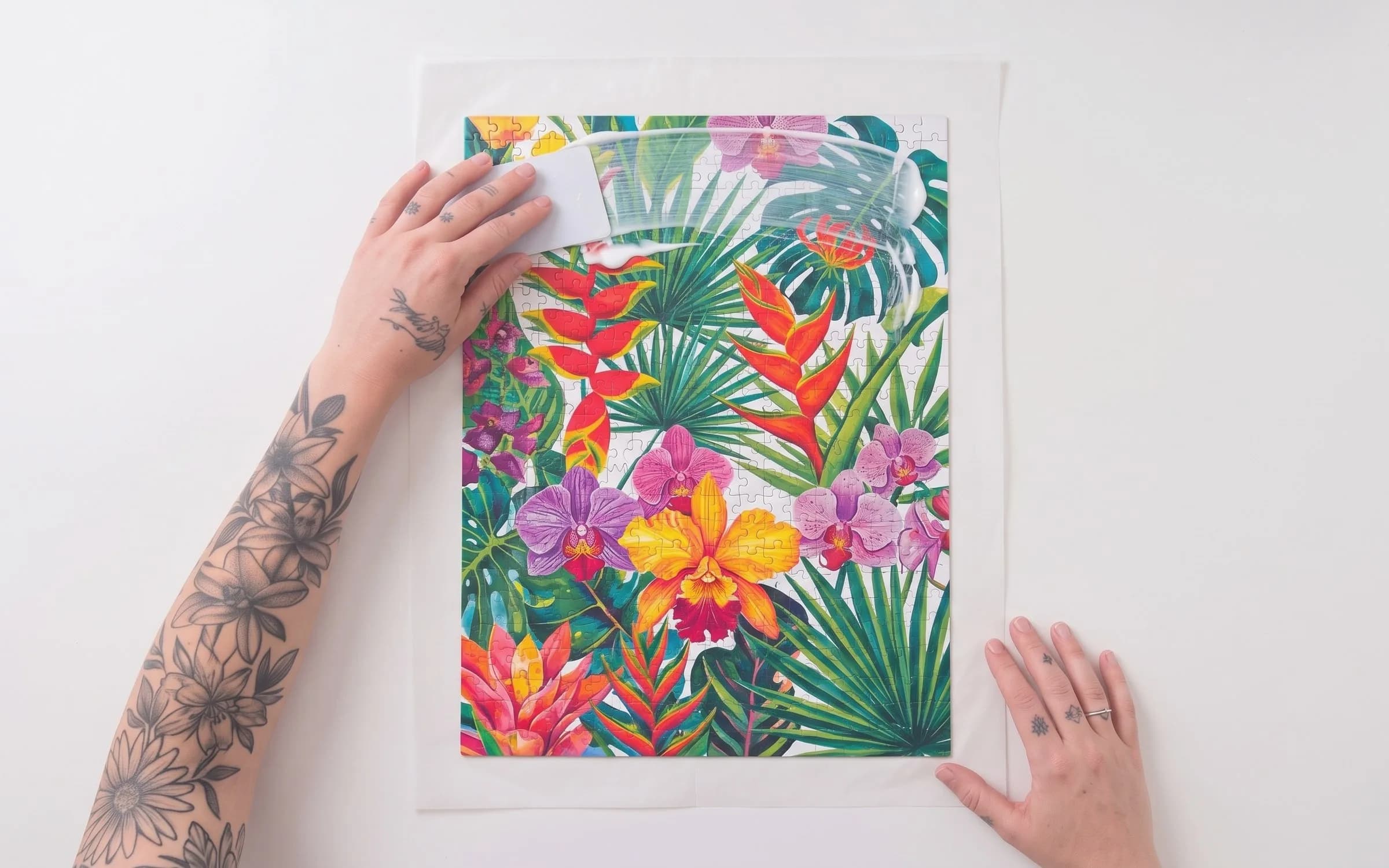
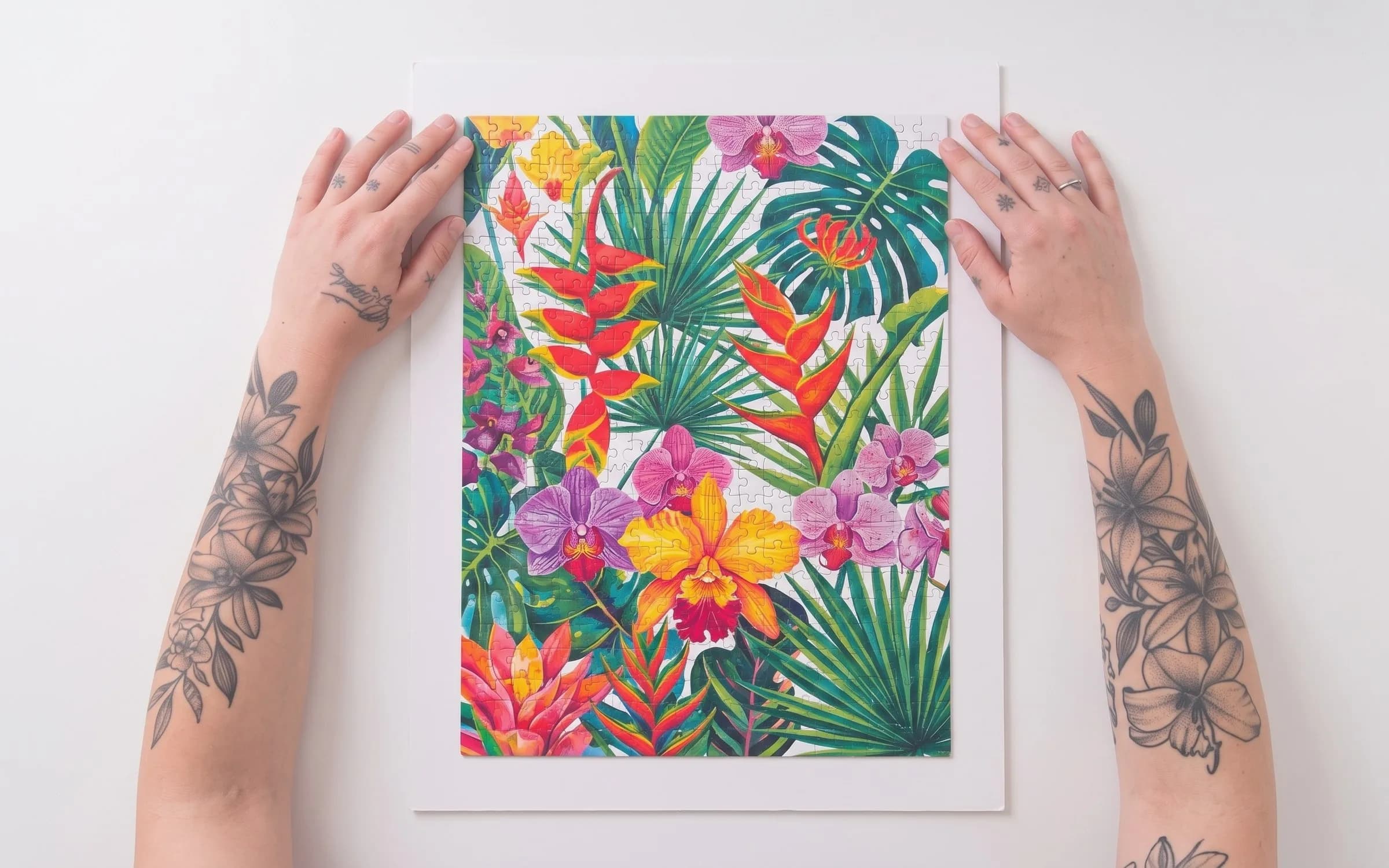
Pro tip: If you notice the edges lifting as it dries, you can flip it over and apply another thin layer to the back, or leave it overnight with something heavy on top. Additionally, sealing the front helps protect the colors from sunlight, as mentioned by the store Puzzles Tú me Completas.
What Glue or Method Should You Use?
There are several ways to keep the pieces together. Here is a summary of the most popular options:
| Option | Where it's applied | Keep in mind |
|---|---|---|
| Educa Fix Puzzle Glue | On the front | A 250 ml bottle is enough for about 6,000 pieces, and some Educa puzzles already include it in the box. |
| Ravensburger Puzzle Conserver | On the front | A 200 ml bottle is enough for about 4,000 pieces. |
| Mod Podge Puzzle Saver | On the front | Dry to the touch in 15 to 20 minutes, but takes about 28 days to fully cure. |
| Adhesive sheets (e.g., Buffalo Games Puzzle Presto) | On the back | No liquids used. Six sheets cover an area of up to 29 × 21.5 inches and include hangers. |
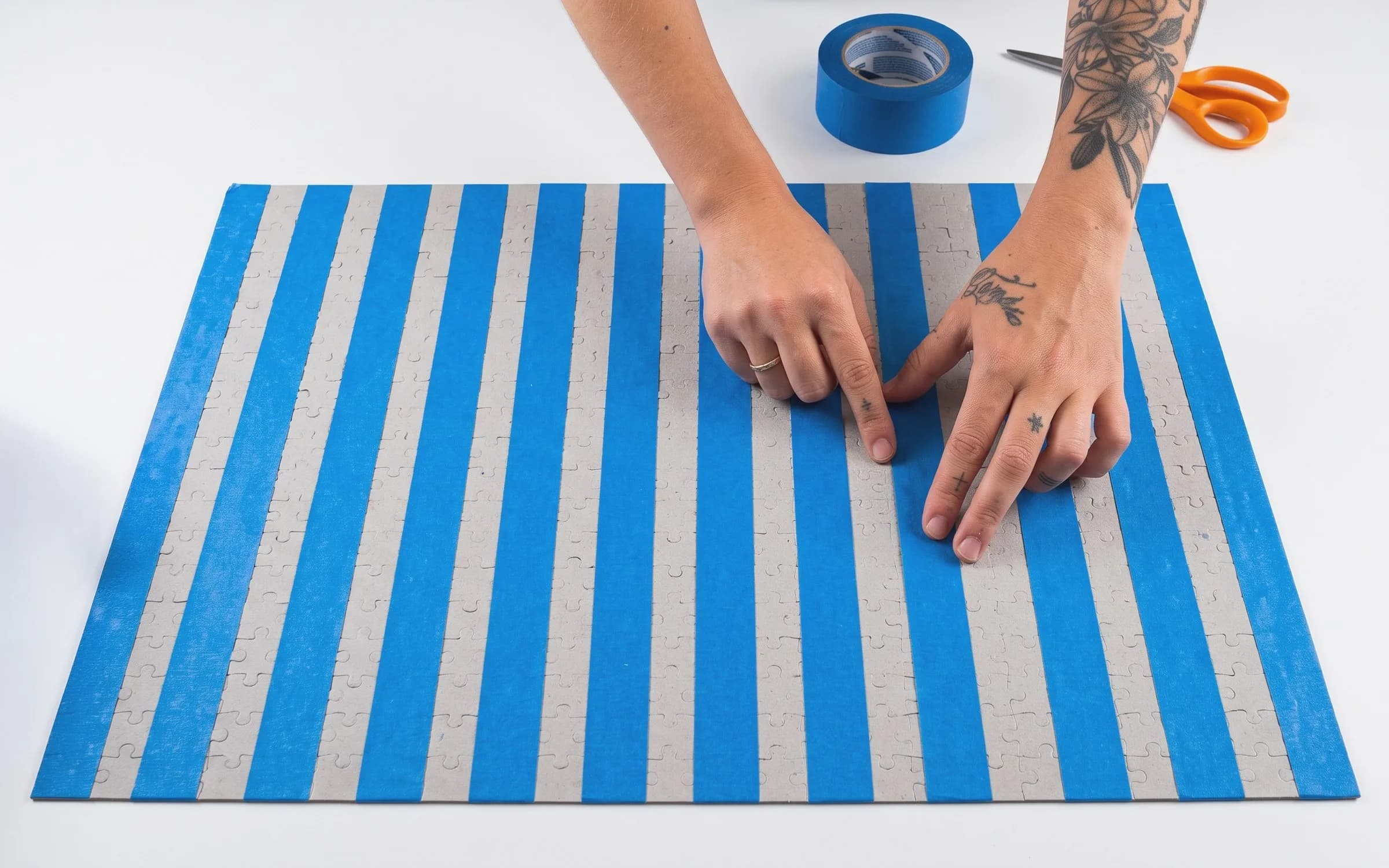
| Masking tape | On the back (in strips) | The corners tend to come loose and must be pressed down well, and when peeled off, it takes some of the cardboard with it. |
| White craft glue with water | On the front | No manufacturer provides a ratio, and DIY guides are inconsistent. With too much water, the cardboard can warp; it's best to test on a spare piece first. |
In tests conducted by YouTuber Emily, from The Casual Puzzler channel, where she tested four methods in the same video, her favorite was the adhesive sheets, and liquid glue came in last.
What Can Go Wrong When Gluing?
Learning from the mistakes of others is the best way to ensure success. Be careful with the following:
- Gluing the puzzle to the table: This happens when you don't put wax paper underneath. It happened to Katherine, and Emily's puzzle also got stuck to her puzzle board.
- Leaving streaks or marks: Glue is usually white when applied and clear when dry, which makes it difficult to see where you've already put product and can leave visible streaks, as happened to Emily when she couldn't tell where she had applied the glue.
- Pieces falling out: If you flip it carelessly, pieces can fall out, as happened to the Puzzles Tú me Completas team while handling it.
- Sticking to the frame's glass: If you frame it before it's fully cured (wait 24 hours), trapped moisture can cause the image to stick to the glass.
- Breaking once hung: If you only glue it with liquid glue and hang it without a rigid backing, like foam board, it will end up breaking at the stress points.
What Size Frame Do You Need for a 1,000-Piece Puzzle?
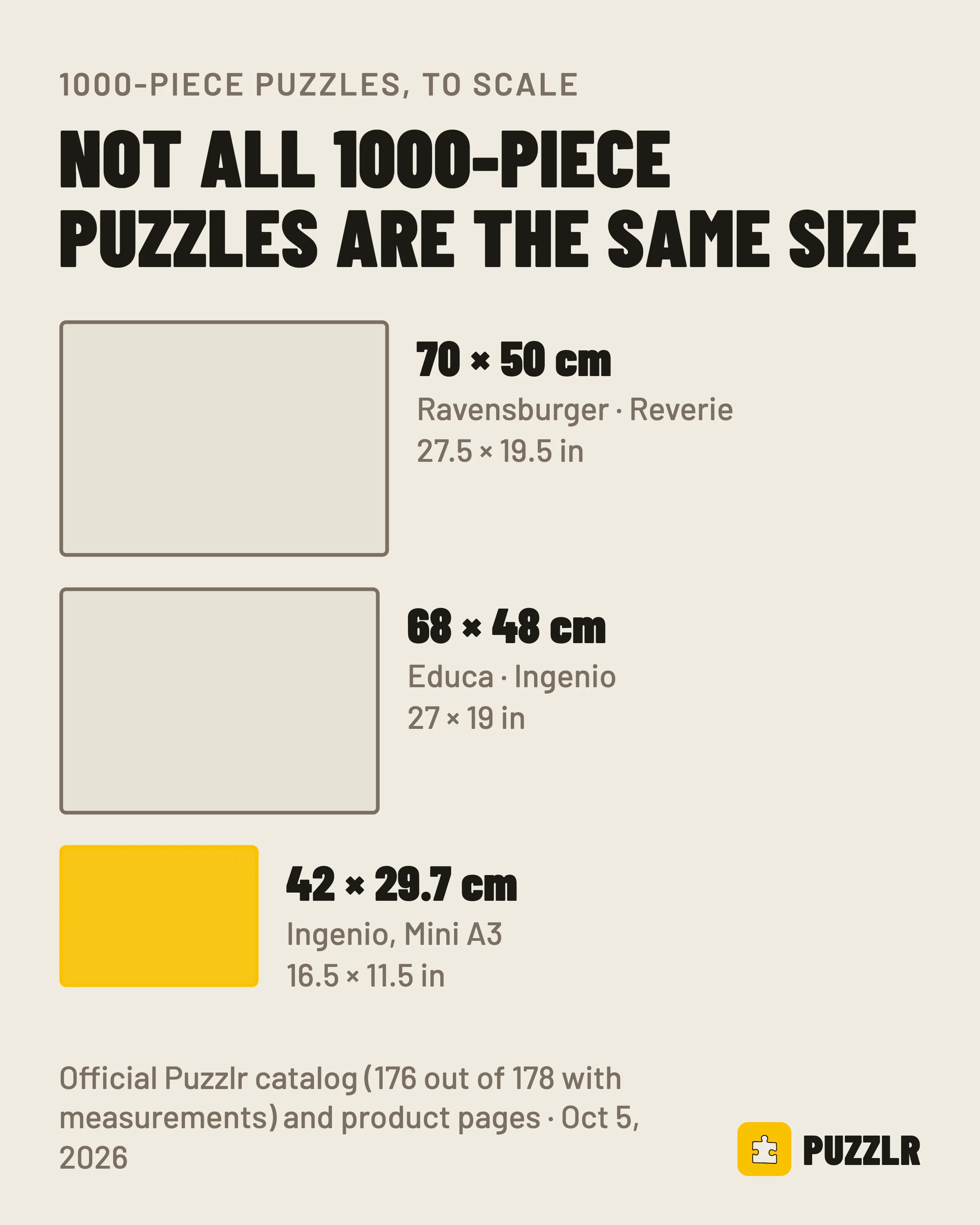
Almost always one around 70 × 50 cm, but you should measure your own because it changes depending on the brand.
| Brand | 1,000-piece Size |
|---|---|
| Ravensburger | 70 × 50 cm |
| Reverie | 70 × 50 cm |
| Clementoni | 69 × 50 cm |
| Educa | 68 × 48 cm |
| Ingenio Destreza Mental | 68 × 48 cm |
| Buffalo Games | 68 × 50 cm (26.75 × 19.75 inches) |
| Ingenio Destreza Mental (Mini A3 line) | 42 × 29.7 cm |
The sizes for Reverie and Ingenio come from their official catalog on Puzzlr, where 176 out of 178 1,000-piece puzzles have their dimensions registered; the rest come from each product's page.
How to Frame a Puzzle Without Gluing It
With a shadow box frame. According to the steps by Artifact Puzzles:
- A clear shadow box frame, about 2.5 cm deep.
- The puzzle at the back, centered with strips of foam board around it.
- A mat board (passepartout) on top, with the opening slightly smaller than the puzzle, to hold it in place without the glass touching it.
- The frame backing.
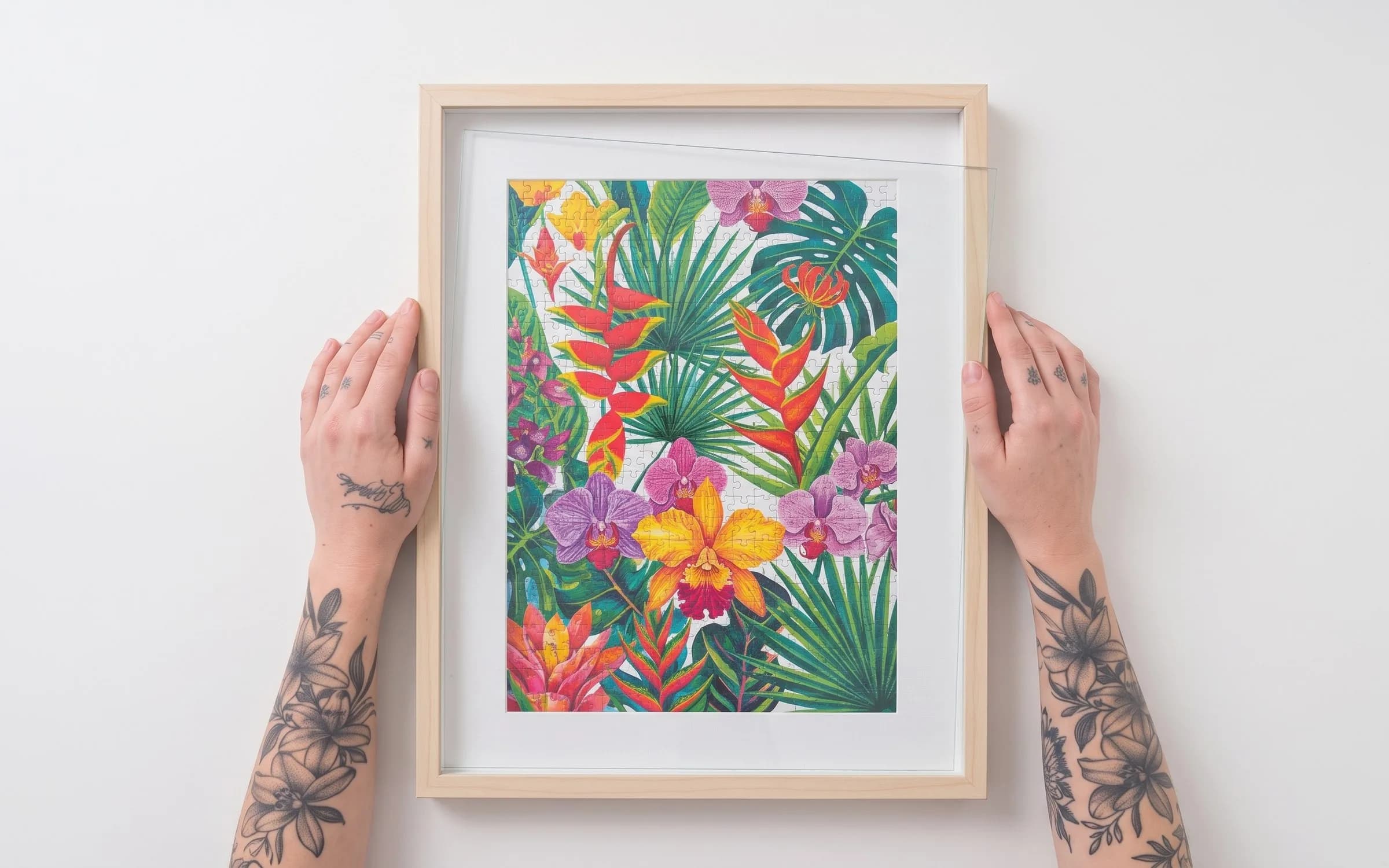
This way, it can be hung and taken out to put together again.
Should You Glue Wooden Puzzles?
Wooden puzzle manufacturers recommend against it. Artifact Puzzles notes: "Gluing the puzzle down means you will never be able to play with it again. This method is definitely not recommended." Liberty Puzzles also advises against it and sells frames with acrylic on the front and back.
Keep in mind that any hanging puzzle fades over time, and this happens faster with more light, according to Artifact Puzzles. A wall with no direct sunlight will better preserve your artwork.
If you're looking for a quick, glue-free challenge, visit our Daily Jigsaw Puzzle on the Puzzlr website, where you can put together a new masterpiece every day right in your browser. And if you need tips for your next project, check out our guides on how to do a 1,000-piece puzzle and how long a 1,000-piece puzzle takes.
Frequently Asked Questions
-
How do you glue a puzzle for framing?
Slide it onto wax paper, run a rolling pin over it to flatten the pieces, and apply a thin layer of special puzzle glue from the center toward the edges. Then, mount it on foam board for rigidity.
-
What glue should you use for a puzzle?
You can use specific glues (like Educa Fix or Ravensburger Conserver), Mod Podge Puzzle Saver, or adhesive sheets if you prefer not to use liquids. In tests, YouTuber Emily preferred the adhesive sheets.
-
Does the glue go on the front or the back?
Liquid puzzle glues (and Mod Podge) are applied on the front. Adhesive sheets and tape are applied on the back. You only apply a second layer on the back if the edges lift as it dries.
-
Can you glue it with white craft glue and water?
It is possible. No manufacturer provides a ratio, and DIY guides are inconsistent. With too much water, the cardboard can warp; it's always best to test it on a spare piece first.
-
How long does it take to dry?
The glue usually sets in 4 to 5 hours, although Mod Podge Puzzle Saver takes about 28 days to fully cure. However, to prevent moisture from getting trapped and the puzzle from sticking to the frame's glass, it's recommended to let it air dry and cure for about 24 hours.
-
What size frame do you need for a 1,000-piece puzzle?
Almost always one around 70 × 50 cm, but you have to measure your own because it changes depending on the brand. Some measure 69 × 50 cm, 68 × 48 cm, or even 42 × 29.7 cm for mini formats. It's best to measure your finished puzzle before buying the frame.
-
Should you glue wooden puzzles?
Wooden puzzle manufacturers recommend against it. The best option is to use a shadow box frame where the mat board holds the puzzle in place without the glass touching it.
-
How do you frame a puzzle without gluing it?
With a shadow box frame. Place the puzzle at the back, center it, and put a mat board (with an opening slightly smaller than the puzzle) on top. The mat board holds the puzzle without the glass touching it.
-
What goes wrong when gluing a puzzle?
The most common mistakes are: it getting stuck to the table because there was no wax paper underneath, visible streaks when it dries, it sticking to the frame's glass because it wasn't left to dry for 24 hours, or it breaking when hung due to the lack of a rigid backing.